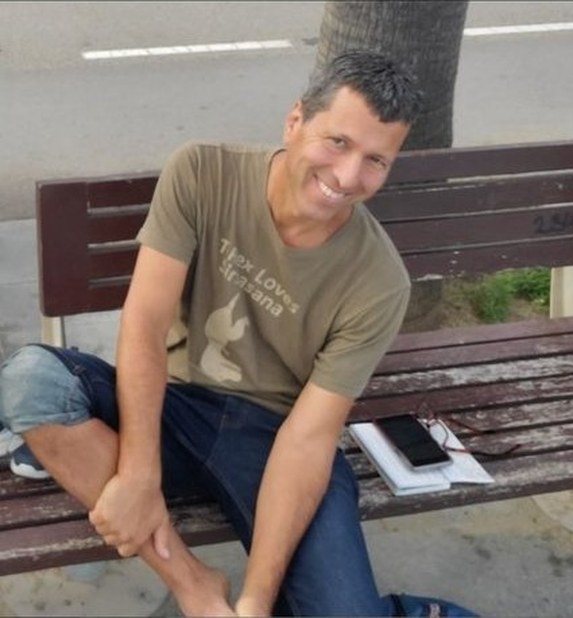
There was no gentle onset, no slow decline I could see coming. I had been severely damaged by a flu vaccine, but I did not understand that at the time. Early on, I thought it was my thyroid, and then I thought it was an ATP, cellular, and mitochondrial issue. Countless doctor visits to no avail. Tens of thousands of dollars spent with no relief. It was like living with a severe flu every single day of my life, while still trying to work and hold my marriage and home together. I lived inside a level of devastation and desperation that I still don't have adequate words for. I was much more dead than alive.
When you have Chronic Fatigue Syndrome, you are handed a label that feels like a life sentence. Doctors tell you there is no cure, or worse, imply it's all in your head. Your lab work comes back inconclusive, or maybe a marker here or there is flagged, but none of it comes close to explaining what you're actually experiencing. You feel like walking death, and the best your doctors can offer is "just manage it."
But the defining moment for me wasn't a pill or a new medical protocol. It was the moment I came across the reality that a severe, physical health condition can be completely driven by neurology, by the brain, and by how we process stress in our world. Initially, I was deeply skeptical. I remember thinking, "Never in a million years could my brain be producing this level of pain and suffering." But the more I dug into my own fear and anxiety patterns around my illness, the closer I came to an epiphany.
The second I was convinced intellectually that my system wasn't structurally ruined, my nervous system did something it hadn't done in years: it relaxed. I realized there was a way out. It wasn't an easy path: it required me to completely reevaluate how I thought about health, change my life, cut my work to part-time, and aggressively train myself not to panic when symptoms flared. It takes work, and there are massive ups and downs, but overcoming this will become the defining foundation that the rest of your life is built around.
It took four years before I found an answer. I was working on my feet in a casino, pushing myself to the absolute breaking point every single day, right on the edge of a nervous breakdown. I know what it's like to look at the rest of your life, completely broken and in torment, and not want to live some days.
When I finally began to retrain my brain, breaking that panic loop felt almost impossible because my body was a wreck. But on a practical level, it started with two things. First, a relentless mental reassurance. Even when my system was in shambles, I had to continuously send myself the message: I am safe right now. Second, I had to find a safe way to push against my symptoms. For me, that was swimming. In the water, the weight was taken off my arms and legs. I was moving, but my brain wasn't registering threat. I was literally retraining my brain that movement did not equal pain.
If you are trapped in this loop, you have to find your equivalent of the pool: a safe boundary where you can move, push back gently against the symptoms, and show your scared puppy of a brain that it doesn't need to shut your body down to protect you.
Let's shatter a myth right now: recovery does not mean the old patterns disappear forever. A decade after reclaiming my life, when a symptom flares up, my brain can still default to that worst-case-scenario line of thinking. That is just how the human brain is wired to protect us.
Here's the part nobody tells you: the neural pathway your brain built during years of illness doesn't vanish once you've recovered. Think of it like a paved highway cut through a hillside. You can stop driving on it, build a new trail through the woods instead, walk that new trail every day for years — the highway fades, and your new road becomes the more traveled one. But the highway is still there beneath the overgrowth, and it's still an easy road for your brain to find. A hard week, a big stressor, even a random ache, can put you right back on it before you've noticed you left the trail.
Sometimes, when this happens, the symptom itself even changes shape — your body finds a new way to sound the same old alarm. That's worth knowing so it doesn't throw you if it happens, but it's not the main event. The main event is always the same: you're back on the highway, and the work is finding the trail again.
When my neck locks up today and my mind tries to convince me "this time it's structural," I stop and cross-examine the symptom. Does it move? Does it fade when I'm deeply engaged in something I love? A structural injury doesn't play hide-and-seek. If it shifts, that's my proof I'm on the highway, not looking at real damage.
I learned this the hard way recently. I went through a major relapse that lasted months, and through much of it I was reaching for cannabis every time the heavy symptoms hit. It numbed things, but it also kept me from the one thing that actually works: catching the pattern in the moment, pausing, calming my system, and showing my brain I was safe. That interruption has to happen right when the symptom shows up. Think of Pavlov's dog: you can't ring the bell an hour after the food and expect the connection to form. I didn't get out of that relapse until I stopped reaching for cannabis when the symptoms came, and did the work instead.
Recovery isn't about never finding yourself back on that highway. It's about noticing faster each time, and getting yourself back onto the trail you built.
Recovery from CFS didn't end my story. It opened the next one.
Toward the end of my illness, I leaned on cannabis to take the edge off my symptoms. It brought real relief in the moment, and at the time I didn't understand that it was limiting me. The real work — the nervous system retraining, sitting with anxiety long enough to actually change your relationship to it — has to happen in the moment it's arising. Cannabis blunts that moment. It's a band-aid, and if you use it as one, the injury doesn't heal.
After I'd recovered, and after a spiritual and intellectual awakening of my own, I started working seriously with plant medicines, delving into the nature of reality itself. That path eventually led me to open an iboga clinic in Puerto Peñasco, focused primarily on addiction treatment.
What I've learned, ceremony after ceremony, is that this work isn't really about nervous system relief. It's about perspective. A healing journey holds up a mirror and shows one the patterns, the fears, the places that you've refused to look. What I try to hold for people is safety: a room steady enough that whatever surfaces can actually be processed. That's where I've watched real healing happen, again and again — what I call the "come to God" moment, when someone finally sees the shape of what's been driving their health crisis.
I'll be honest with you about something most people in this space won't say out loud: I don't think the line between "psychosomatic" and "real disease" is where modern medicine draws it.
I believe the body and mind were never separate to begin with: that split is a convenient fiction, not a biological fact. And I believe that even conditions with a name, a diagnostic marker, a confirmed antibody test (the ones doctors call "real" as if everything else isn't) are still, at their root, expressions of how a person has processed stress, suppressed emotion, and disconnected from their own body over a lifetime. The marker is real. What's driving it often isn't as separate from you as you've been told.
I understand why that's a hard thing to hear. I've lived it. When you're sick and scared and someone tells you "this is coming from inside you," it can sound like blame, like gaslighting, like one more person refusing to take your suffering seriously. I know that sting personally. But there's a difference between blame and responsibility. Nothing about this belief means you did something wrong, or that you're weak, or that your suffering isn't real. It means you have more power inside you than a system built around managing symptoms for life will ever tell you.
A model of medicine built primarily around suppressing symptoms rather than asking why they exist in the first place was never going to be the whole answer. I don't say that to dismiss the real, sometimes lifesaving tools that model has built. I say it because I believe healing (real, root-level healing) asks a different question than "how do we make this stop for now." It asks: what is this trying to tell you, and what would it take to actually resolve it, not just quiet it.
Underneath my belief about your body's capacity to heal is something I want you to actually feel, not just read: you are not just a set of symptoms being managed. You are the author of your own healing, working with a body that is far more capable, and far more listening, than you've been led to believe.
This is my belief, not a medical instruction. I'm not a doctor, and nothing here should be read as telling you what to do about a specific diagnosis or treatment. That's between you and the people caring for you.
Read the honest answers to the questions people ask most before starting this work.